

PAYT i KAYT
Pay as you throw / Know as you throw
Transparent waste fees based on data, not assumptions.
KAYT (Know As You Throw) It is a “knowledge-first” approach: you build reliable records of who uses the waste infrastructure, when and how, and how waste sorting actually takes place.
PAYT (Pay As You Throw) it goes a step further: it introduces a billing model where the fee is linked to actual waste generation (e.g. number of events, volume, weight, or a hybrid approach).
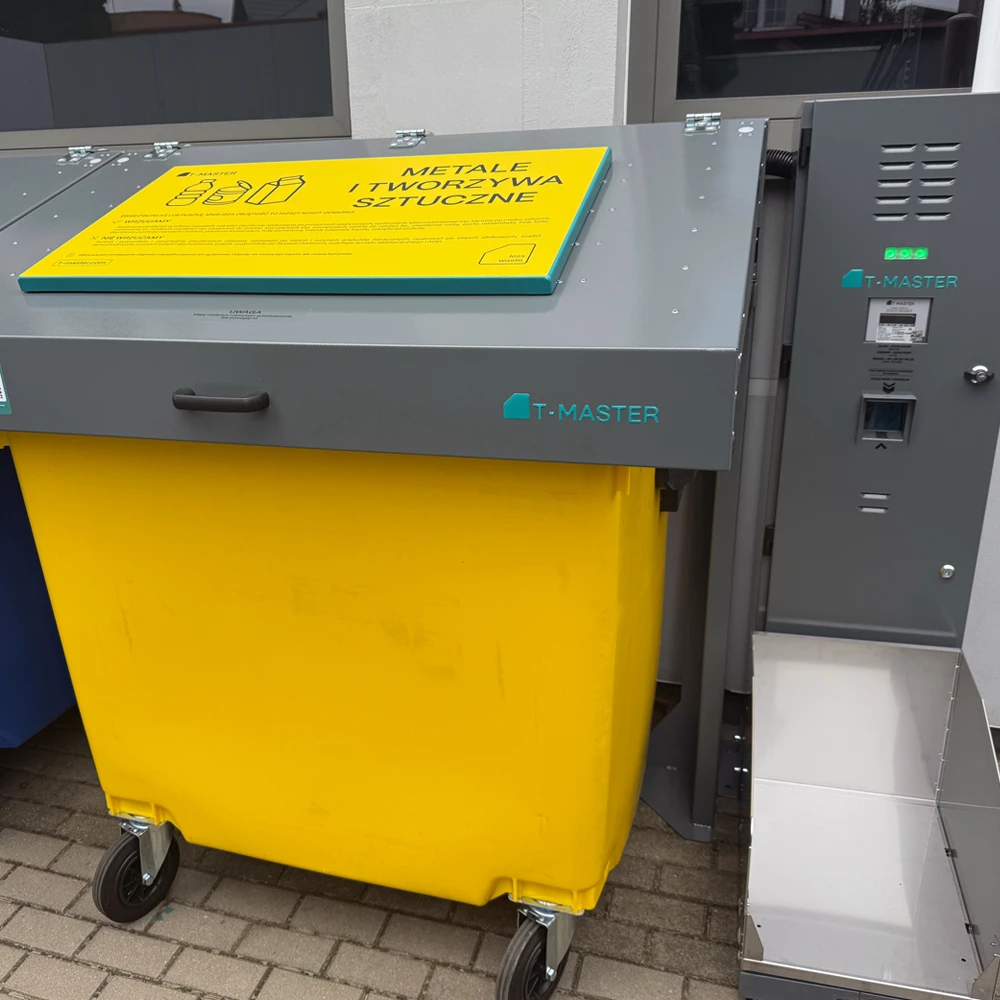
T-Master solutions help implement both models in practice: from identifying users and collection points, through event logging and reporting, to integrations with municipal and operator systems. As a result, PAYT/KAYT is not just a concept, but a process that works every day – in multi-family housing, single-family housing and commercial facilities.
Quick overview: KAYT vs PAYT
First, you collect data: identification, logging, analytics and reports. You can run a pilot without changing fees.
When the process is stable, you enable data-based billing: events/volume/weight or a hybrid model.
- Scalable: from pilot to full deployment.
- Model selection tailored to building type and local regulations.
- Possible integrations with municipal and operator systems.
What is PAYT
(Pay As You Throw )?
PAYT it is a waste fee model in which payment is linked to actual waste generation, rather than a single flat rate for everyone. In practice, the billing system is based on operational data: number of events (e.g. collections or deposits), volume (container capacity and collection frequency), weight (weighing), or a hybrid approach (e.g. fixed part + limit + surcharges).
PAYT is most often implemented after the KAYT stage - when the logging process is stable and users understand the rules. This makes billing transparent, explainable and less prone to disputes.
What PAYT delivers in practice
- greater fairness: “I pay in proportion to what I generate”
- motivation to reduce mixed waste and improve sorting
- better cost predictability and data-based arguments
- the ability to design limits and incentives (e.g. educational ones)
What data PAYT can be based on
- Events: collection/deposit/opening events assigned to a property or user
- Volume: container capacity + collection frequency
- Weight: weighing, where logistically justified
- Hybrid: fixed part + limit + surcharges/bonuses
What is KAYT (Know As You Throw)?
KAYT it is an approach in which the key is obtaining reliable data on behaviours and waste streams: who uses the infrastructure, how often, in which fractions, and where problems occur (overflows, illegal dumping, contamination). KAYT can operate without introducing new fees—as a “learn and organise” stage.
In practice, KAYT is the foundation for PAYT: first you stabilise the process, build reporting and communication, and only then implement billing. This is the most common path for minimising conflicts and complaints.
Why are PAYT and KAYT so important for waste management?
When the fee system is detached from actual waste volumes, cost management becomes more difficult and residents often feel a lack of fairness. PAYT/KAYT introduce data-driven management: they help identify sources of problems, plan logistics, and design rules that are clear and defensible.
Data-based implementations (KAYT) and billing models (PAYT) can also support education and reduce issues such as illegal dumping, overflows and contamination of sorted fractions.
How PAYT/KAYT works behind the scenes
Effective PAYT/KAYT requires a process that is simple for the user while providing reliable data. Regardless of the implementation variant, several key elements are always present in the background: identification, event logging, reporting, and incident handling rules (e.g. complaints).
T-Master helps tie these elements into a coherent system: collection point infrastructure, access control, logging and analytics, and—where needed—integrations.
Defining “who is responsible”: apartment/household/user, collection point, container or access permission. The model is selected to match local conditions (building type, regulations, operator).
Recording events: openings, deposits, collections, service actions, incidents and alerts. The data forms the basis for reports and billing.
Reporting for municipalities/operators/property managers: frequencies, loads, fraction trends, quality issues, as well as summaries for communication with users.
KAYT: process improvements, education and infrastructure adjustments. PAYT: fee calculation based on stable data.
For an implementation to be effective, consistency is required: infrastructure + process + data + communication. T-Master supports this approach through project work: pilot projects, refining rules, scaling and PAYT billing.
T-Master solutions
for PAYT and KAYT
PAYT/KAYT implementations require a technological “backbone”: field infrastructure and a system layer that collects events, organises data and provides reports. T-Master acts as the integrator here, helping translate the PAYT/KAYT concept into an operational solution.
The following areas are typical components of a project (the selection depends on local conditions and the billing model).
Access to waste enclosures/collection points for authorised users, reduction of illegal dumping, and linking events to a property or user—depending on the project.
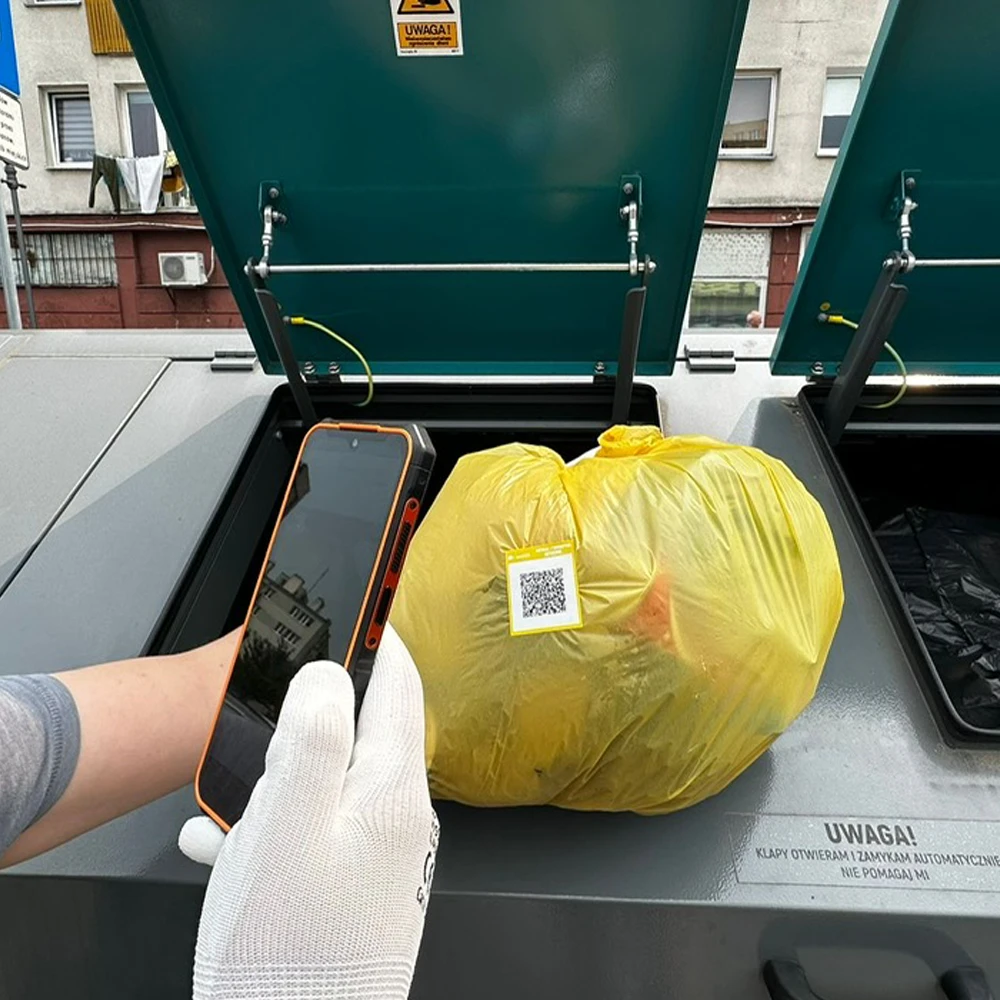
Recording “what, when and where”: collections, deposits, service actions and incidents. The data forms the basis for KAYT and, in the PAYT model, can feed billing.
Reports on point loads, trends, quality issues, seasonality, sorting indicators and the effectiveness of corrective actions.
Integrations with operator and municipal systems: records, billing, CRM/ERP, data exports and APIs.
PAYT/KAYT implementation scenarios
PAYT and KAYT can be implemented in stages. This is important because it allows the process and communication to be stabilised first, and billing introduced later. Below are several scenarios that often work well in practice.
Multi-family housing: KAYT → PAYT
In multi-family housing, the biggest challenges are order and integrity of collection points: illegal dumping, mixing of fractions, overflows and lack of accountability. KAYT helps organise this through access and logging, while PAYT can introduce a fairer fee model once the system is stable.
- controlled access to the collection point
- event and collection logging
- reports: loads, incidents, sorting effectiveness
- optional: PAYT (e.g. limits + surcharges, events)
Single-family housing: collection logging and billing
In single-family housing, collection and fraction logging, seasonality and schedule optimisation are often key. PAYT may be based on the number of mixed-waste collections, limits or a hybrid model, depending on local arrangements.
- assigning events to an address/household
- fraction and trend reports
- optimisation of schedules and capacities
- PAYT: a model tailored to infrastructure and regulations
Commercial facilities / institutions: KPIs and B2B billing
For commercial facilities, measurability and service standards matter: reports, KPIs, SLAs and cost predictability. KAYT provides management data, while PAYT allows costs to be linked to actual service usage.
- usage and trend reports (fractions, loads)
- data-based billing
- better organisation of collection points and service
Pilot project: a quick KAYT start in a selected area
A pilot allows assumptions to be tested and data collected before the system covers an entire city or municipality. This is the stage where the process, communication and reporting are refined—only then is a decision made about scaling and PAYT.
- selection of a representative area
- launch of logging and reports
- conclusions and process adjustments
- decision: scaling and/or PAYT
PAYT/KAYT implementation stages – how to do it smoothly?
mplementing PAYT/KAYT is an operational project, not just a technology purchase. The best results come from a staged approach: first goals and process, then data (KAYT), and finally billing (PAYT).
Process consistency, reliable data, simple communication and staging. That’s why KAYT is often the best starting point: it allows real behaviours and problems to be observed before PAYT billing is introduced.
Do you have more questions?
Of course! Get in touch with our team — we’ll explain everything during a meeting.
Contact usFAQ:
PAYT (Pay As You Throw) is a waste fee model in which the charge is linked to the actual amount of waste generated (or with the activity related to disposing of it), rather than just a flat fee. In practice, “you pay for what you throw away”.
PAYT can be based on various indicators (depending on infrastructure and local rules):
- number of events (e.g. collections/deposits/openings assigned to a property),
- volume (container capacity + collection frequency),
- weight (weighing, where justified),
- hybrid model (e.g. fixed part + limit + surcharges).
A well-implemented PAYT increases the sense of fairness, supports waste sorting and helps control system costs.
KAYT (Know As You Throw) It is a “knowledge-first” approach: you build reliable data about how the system works in real life — who uses the waste infrastructure and how, what the trends are, and where overflows, illegal dumping, fraction contamination and other problems occur.
KAYT is often a safe stage 1 before PAYT: it allows the process, education and communication to be refined before billing is introduced. This reduces disputes and complaints because decisions are based on data.
In short: KAYT = data and transparency, and PAYT = data-based billing.
Solutions T-Master help translate PAYT/KAYT into a working operational system: from field infrastructure to the data and reporting layer.
This most often includes:
- Identification and event logging (when, where, how often and in which fractions),
- access control to collection points (where this solves the problem of illegal dumping),
- reporting for municipalities, operators and managers (KPIs, trends, loads, incidents),
- integrations with operator/municipal systems (exports, APIs).
This makes it possible to start with a KAYT pilot and move to the PAYT model once the process is stabilised.
Yes — a staged approach is usually the best path. The most common route is: Audit and goals → KAYT (pilot) → scaling → PAYT (billing).
A KAYT pilot allows data to be collected and rules and communication with users to be refined. PAYT is implemented only once the system is stable and understandable.
This approach reduces risks, supports social acceptance and provides solid foundations for billing.
The biggest source of disputes is a lack of trust in data or unclear rules. That’s why the following approach works in practice: first KAYT, then PAYT.
What actually reduces the number of complaints:
- transparent reports (when an event/collection occurred and to what extent),
- clear rules and communication (what is counted, what is not, how limits work),
- process integrity (e.g. reducing illegal dumping, access control where needed),
- incident handling procedure (complaints, corrections, exceptions).
When data is stable and understandable, PAYT stops being “controversial” and becomes a fair, fact-based rule.
T-Master Products
Discover solutions that enable the effective implementation of PAYT and KAYT models in practice.
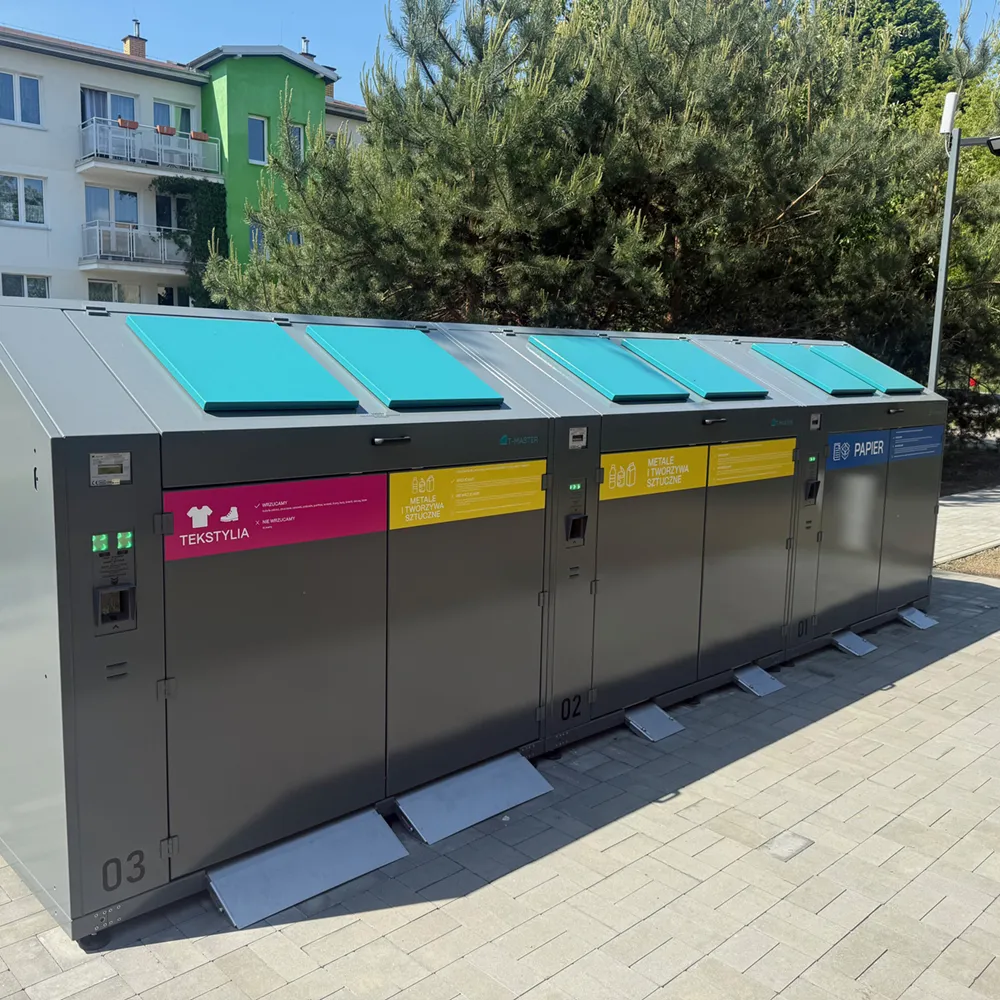
Drop&Go
Aesthetics and functionality in your estate, excluding collective responsibility and increased fees for not separating waste.
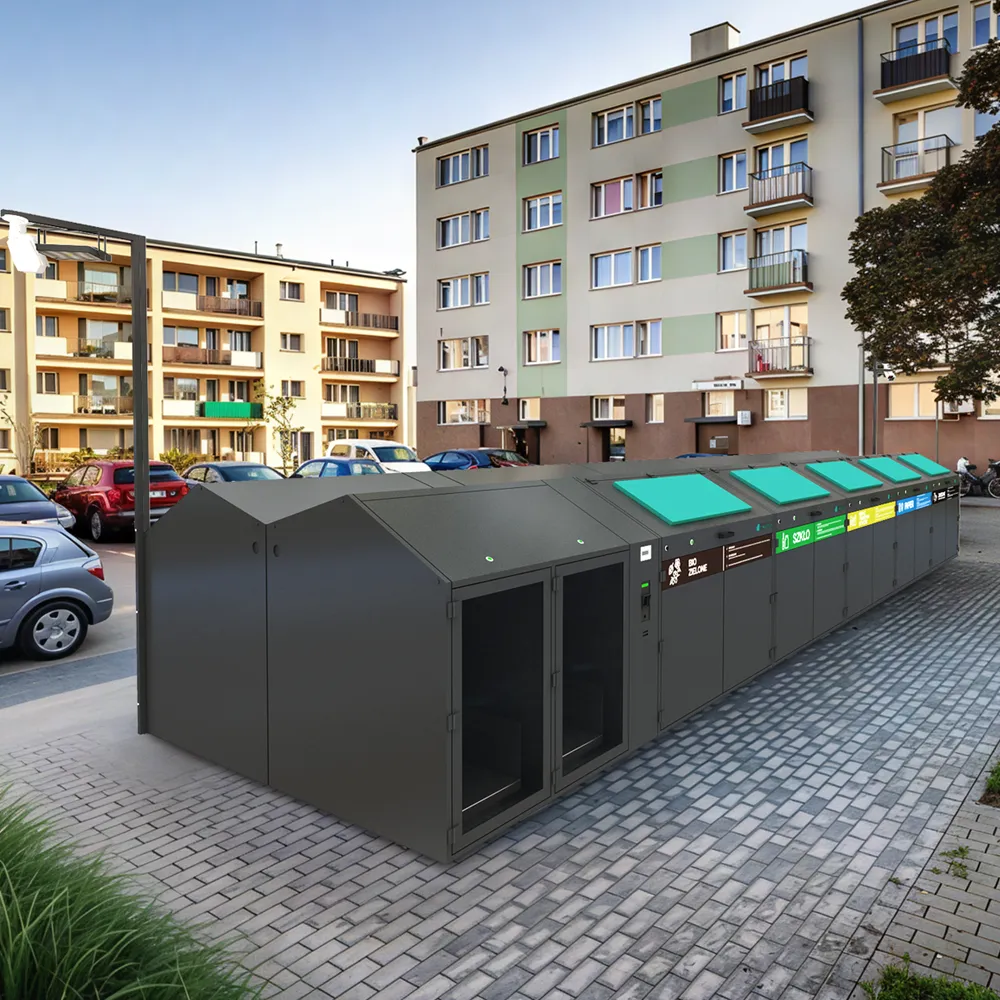
Drop&Go Light
Drop&Go Light is a more affordable version of the Drop&Go device with a single point for waste identification and weighing.

Drop&Go Waste House
Electronic equipment for a waste segregation enclosure or indoor facility within a residential building, serving as a complement to traditional garbage rooms, together with the SISO system (operational and available throughout Poland).
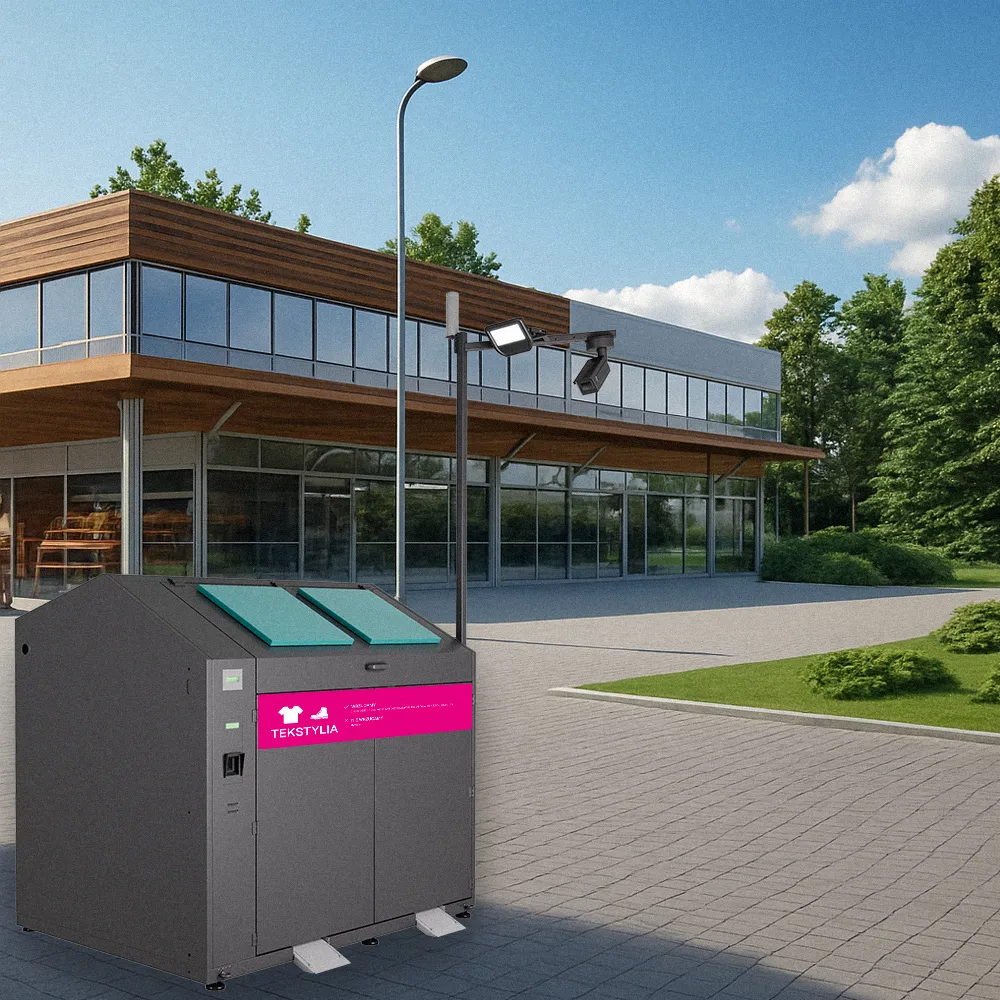
mini Collection Point 247
Thanks to the availability of containers for small waste – such as textiles – in your housing estate, you save time by not having to travel to a PSZOK point far from your home.

e-Collection Point 247
Computerization and automation of selective municipal waste collection points (e-PSZOK).
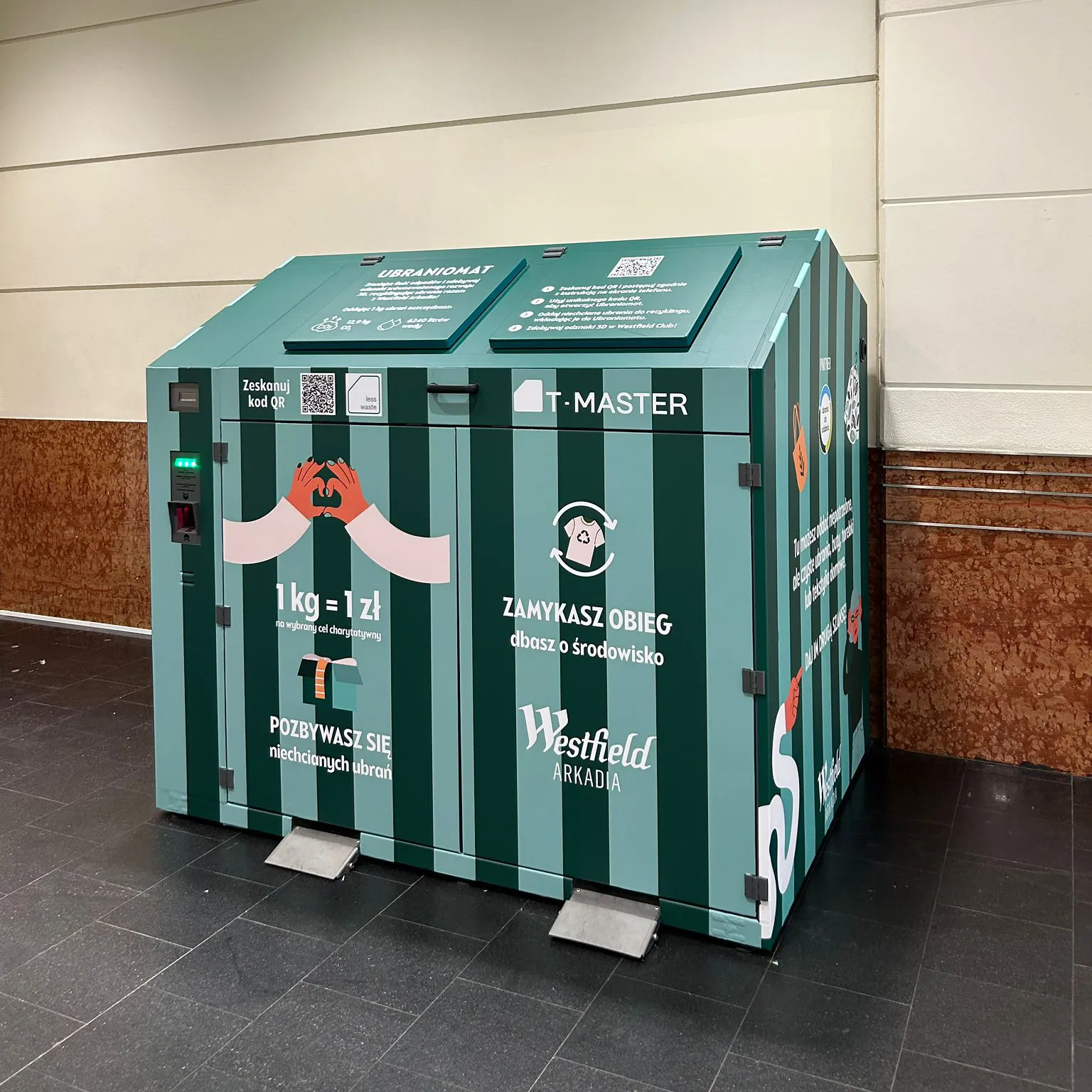
Drop&Go Textile
Promoting sustainable fashion by collecting textiles and accessories that we can give a second life to. Located in a convenient location in a commune or shopping center, it allows you to easily collect unused, good quality clothing that can be reused.
T-Master SA devices and system in more and more cities!
With each passing month, more and more cities are beginning to adopt technologies and devices from T-Master SA. Intelligent waste management is becoming the standard in Poland and around the world.